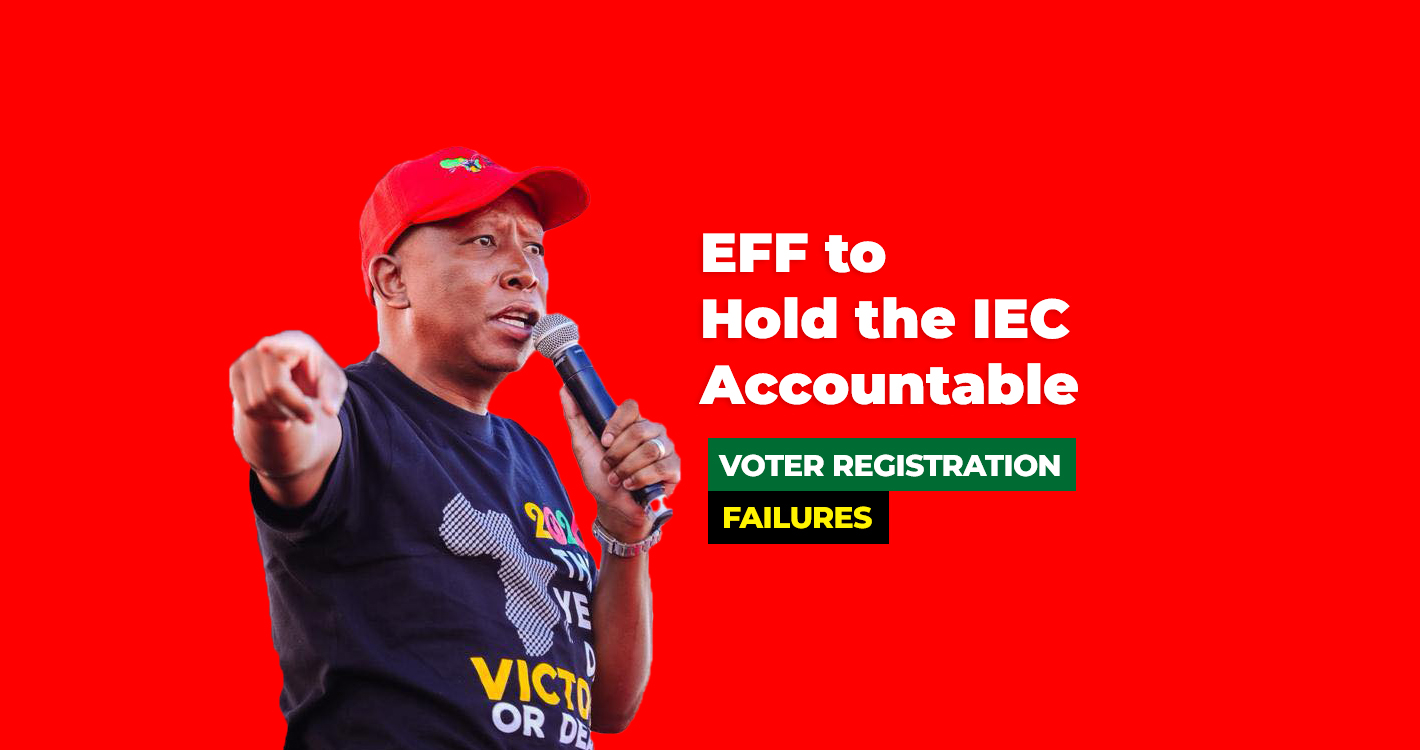
Holding the IEC Accountable for Voter Registration Failures

No eligible voter must be excluded from the democratic process because of IEC system failures, poor communication, or weak voter education. The IEC must act decisively to register all eligible citizens, especially young and first-time voters, and ensure that the right to vote is protected in practice, not only in law.

Free, Fair, and Accessible Elections for All

Constitutional Mandate of the IEC

The Electoral Commission of South Africa has a constitutional responsibility to ensure that elections are free, fair, accessible, and inclusive. Central to this mandate is the duty to ensure that every eligible citizen is able to register and exercise their democratic right to vote without unnecessary barriers.

IEC Downtime and Poor Communication Are Undermining Voter Mobilisation

System Failures & Communication Breakdown

However, serious concerns have emerged regarding the IEC’s voter registration systems, communication failures, and lack of proactive voter education. Political parties are often not formally informed when the IEC online registration system goes offline, despite the direct impact this has on mobilisation, voter registration drives, and campaign planning.

Voters Are Being Penalised for System Failures Beyond Their Control

Digital Registration Risks

A further concern is that citizens who use the IEC online portal to register may later be denied the right to vote if they cannot produce the SMS or OTP confirmation, especially in cases where their names do not appear on the voters’ roll.

This creates an unfair burden on voters and raises serious questions about the reliability of the IEC’s systems. If a voter has attempted to register through an official IEC platform, the system should be able to verify that process without placing the entire responsibility on the citizen

#1 Lack of Voter Education

There has also been insufficient public communication and voter education from the IEC to ensure that citizens understand the importance of confirming their registration status after using the online portal. Many citizens only discover on election day that they are not on the voters’ roll, by which time it is too late for them to exercise their right to vote.

#2 The Registration Gap Crisis

This failure must also be understood against the broader democratic crisis: there remains a significant gap between the number of South Africans who are eligible to vote and those who are actually registered. Stats SA population data continues to show that millions of eligible citizens are outside the voters’ roll, yet the IEC has not demonstrated a sufficient, deliberate, and sustained strategy to close this gap.

#3 Youth Voter Neglect

Our particular concern is the IEC’s failure to target young and first-time voters. Every year, thousands of learners write matric and become eligible to vote. The Department of Basic Education has clear data on the number of learners registered to write matric, yet there appears to be no meaningful, coordinated national programme between the IEC and education authorities to ensure that matric learners are registered before leaving school.

#4 Outdated Registration Methods

The IEC’s continued reliance on voter registration weekends is clearly inadequate. The low registration numbers recorded during these weekends show that this model is no longer sufficient on its own. In a country with low voter participation, youth disengagement, digital access challenges, and declining trust in public institutions, the IEC must move beyond passive registration methods and implement active, year-round voter registration programmes.

#5 A Failure of Democratic Responsibility

This campaign must therefore challenge the IEC’s failure to fulfil its constitutional mandate. Free and fair elections are not only about what happens on voting day. They begin with whether citizens are properly informed, properly registered, and given a fair opportunity to participate in the democratic process.

#6 The Call for Accountability

The demand is clear: the IEC must be held accountable for system failures, poor communication, weak voter education, and the exclusion of eligible citizens from the voters’ roll. South Africa cannot claim to hold free and fair elections while millions of eligible citizens remain unregistered or are denied the right to vote because of avoidable administrative and technological failures.

The IEC Must Answer for System Failures and Voter Exclusion

Make Your Voice Count

Register To Vote & Holding the IEC Accountable


    First


    Last


    South African Phone Number


    South African ID Number


    Our Campaigns

    EFF Slams Ramaphosa for

    While residents face water outages, collapsing infrastructure and poor governance, national leadership praises a metro in crisis. This is not...

    Read More

    2026 The Year of Victory.

    Contact Us

    Winnie Madikizela Mandela House, 119 Marshall Street, Marshall Town, Johannesburg

    Info@effonline.org

    Disclaimer

    We use your ID number to get your voter registration information from the Independent Electoral Commission (IEC). By entering your details here, you give consent for the EFF to process your ID number and voter registration information.